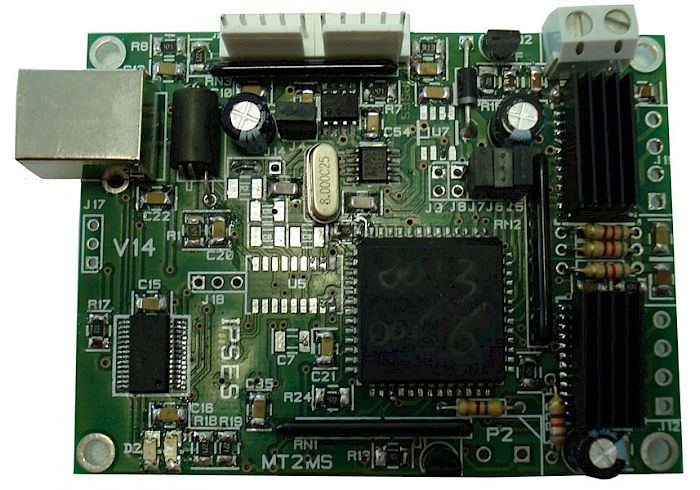
I/O boards and motor control, designed and built by IPSES
Network, USB and CAN inputs and outputs, all galvanically isolated, plus stepper motor control over USB. Technical and purchasing questions are answered by the people who designed them.
Web-IO: 16 inputs and 16 outputs on your network, controlled from a browser
Web-IO boards connect to your Ethernet or WiFi network and are controlled from a web page, with no software to install. They integrate into your own programs via Telnet and, on the WiFi and ADIO versions, via SNMP.
- Web-IO: 16 opto-isolated inputs and 16 outputs, Ethernet, web server and Telnet.
- Web-IO-WiFi: 16 opto-isolated inputs and 16 outputs, Ethernet and WiFi, web server, Telnet and SNMP.
- Web-ADIO: 8 opto-isolated digital inputs and 8 outputs, 8 analog inputs and 8 outputs, Ethernet, web server, Telnet and SNMP.
- Web-ADIO-WiFi: same as Web-ADIO, with Ethernet and WiFi.
All inputs and outputs are galvanically isolated and every digital I/O has its own status LED. Compact or Eurocard format, DIN rail mounting on request.
MT2USB: two stepper motors controlled over USB
MT2USB drives two unipolar or bipolar stepper motors straight from the PC’s USB port. It is designed for rotary movements and x-y positioning on a single plane.
- 2 axes, up to 0.6 A per phase (1.2 A peak), 5-36 VDC motor supply
- Up to 1000 half-steps per second, positioning range of ±1.2 million half-steps
- One limit switch per axis with programmable polarity, homing at power-up, acceleration and deceleration ramps
- Windows driver and demo software, LabVIEW VI library
- 60 x 80 mm board or BOX version with built-in power supply for 230 VAC, 110 VAC, 12 or 24 VDC
For microstepping down to 1/8 step there is MT2USBMS; for currents up to 3 A per phase, MT2HC. MT2USB datasheet
Other I/O boards
- IN8: 8 opto-isolated inputs, USB.
- IO-69-USB: 6 opto-isolated inputs and 9 relay outputs, USB, hardware emergency controls.
- IO-1616: 16 opto-isolated inputs and 16 outputs, USB or RS232.
- CAN-IO: 16 opto-isolated inputs and 16 outputs, CAN bus.
- Relè-IO: expansion board with 16 SPDT relays rated 5 A (250 VAC or 24 VDC).
Windows drivers and software are included across the range.
How to ask
Tell us what you need to connect or move: how many inputs and outputs and of which type, which motors, on which interface and for which application. An IPSES engineer will suggest the right board and send you technical details or a quote.
Documentation
Schede I/O
Web-IO
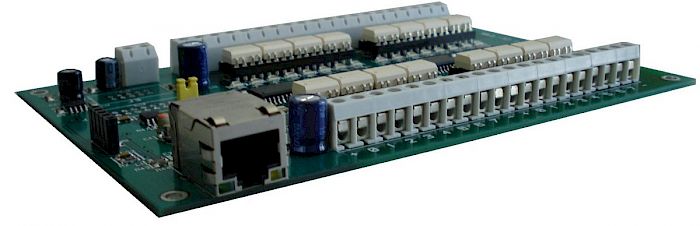
WEB-IO is a card to manage sixteen optocoupled inputs and sixteen optocoupled outputs with Ethernet interface, equipped with a web, telnet, and SNMP servers. The WEB server allows to connect and to manage the card using any web browser (i. e. Internet Explorer), with no needs to install a software on your PC
Details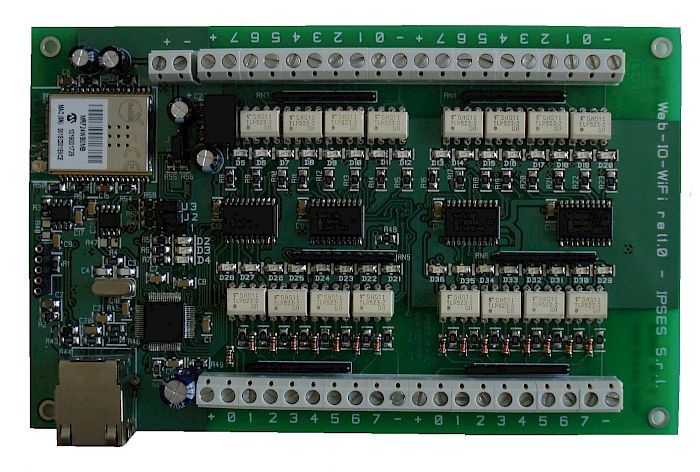
WEB-IO-WiFi
WEB-IO-WiFi is a card to manage sixteen optocoupled inputs and sixteen optocoupled outputs with Ethernet and WiFi interfaces, equipped with a WEB , a telnet , and an SNMP server .
Details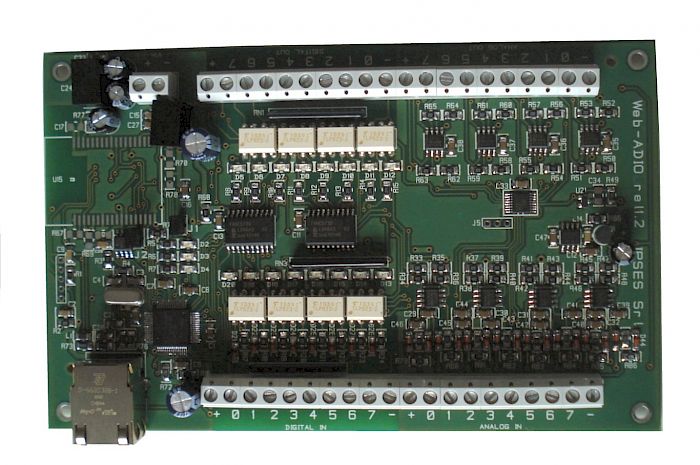
WEB-ADIO
WEB-ADIO is a card to manage 8 optocoupled digital inputs, 8 analogical inputs, 8 optocoupled digital outputs and 8 analogical outputs with Ethernet interface, equipped with a web , telnet , and SNMP servers . The WEB server allows to connect and to manage the card using any web browser, with no needs to install a software on your PC.
Details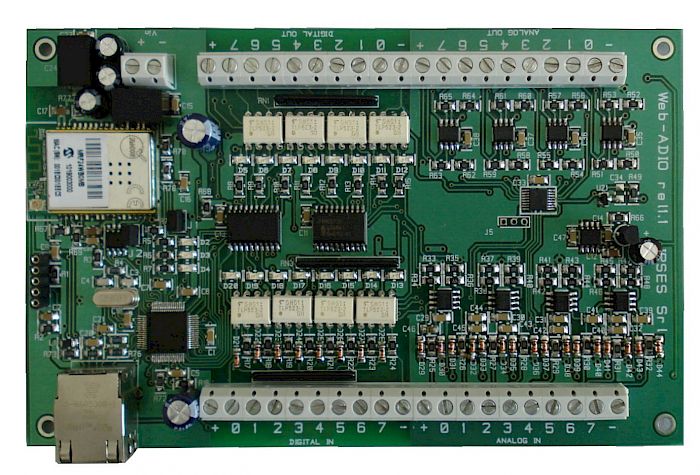
WEB-ADIO-WiFi
WEB-ADIO-WiFi is a card to manage 8 optocoupled digital inputs, 8 analogical inputs, 8 optocoupled digital outputs and 8 analogical outputs with Ethernet and WiFi interface, equipped with a WEB and a telnet and an SNMP server . The WEB server allows to connect and to manage the card using any web browser (i. e. Internet Explorer), with no needs to install a software on your PC.
Details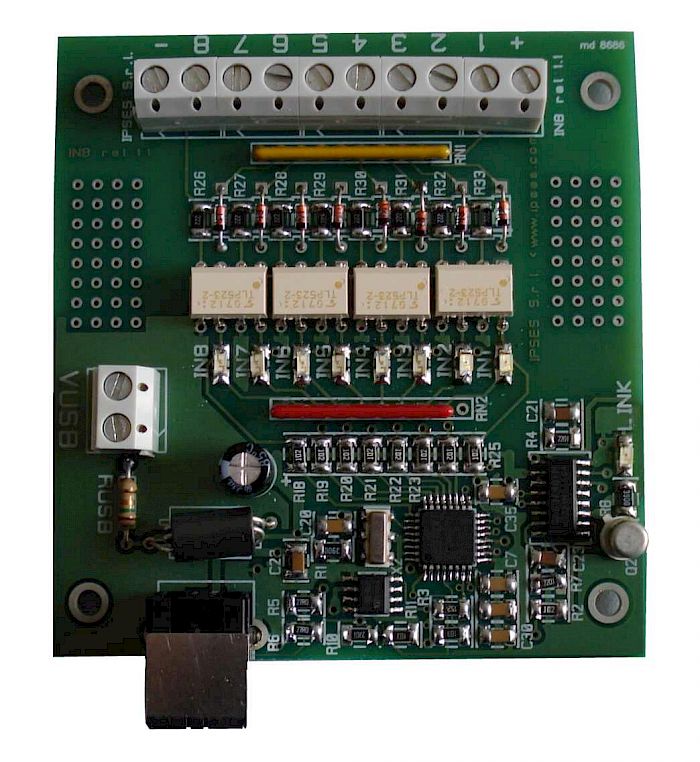
IN8
IN8 is a card with USB interface which allows managing 8 optocoupled inputs . Easy to use, thanks to its installation driver and software libraries which also reduce installation costs, IN8 is the right answer to the need to acquire digital signals from a PC in an industrial environment.
Details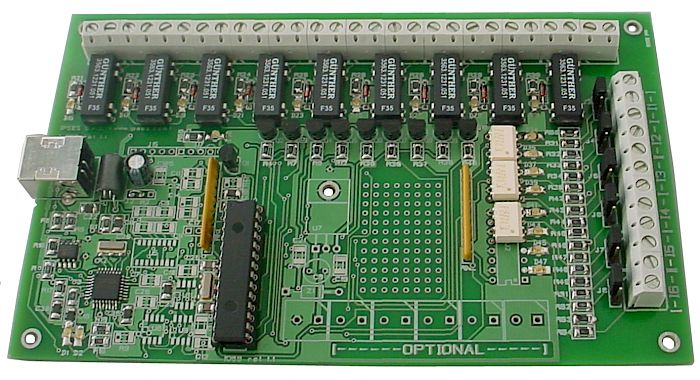
IO-69-USB
IO69-USB is a card with USB interface which allows managing six optocoupled inputs and nine relay outputs . Easy to use, thanks to its installation driver and software libraries which also reduce installation costs, IO69-USB is the right answer to the need to acquire digital signals and to control power outputs from a PC in an industrial environment. Besides, the implementation of hardware controls allows managing anomalous status, switching off all the outputs.
Details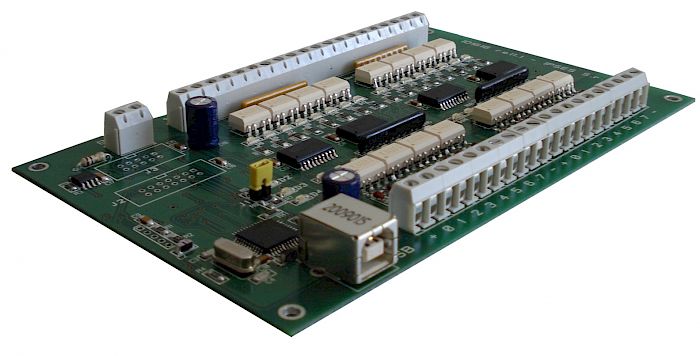
IO-1616
IO1616 is a card with USB or RS232 interface which allows managing 16 optocoupled inputs and 16 optocoupled outputs . Easy to use, thanks to its installation driver and software libraries which also reduce installation costs, IO1616 is the right answer to the need to acquire digital signals and to control power outputs from a PC in an industrial environment.
Details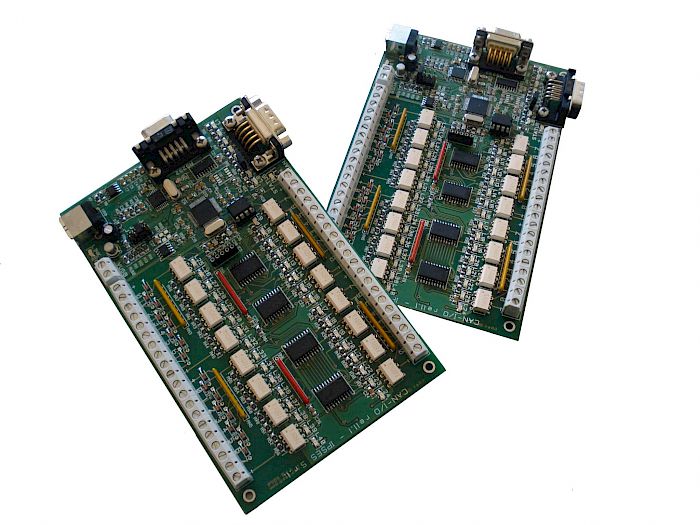
CAN-IO
CAN-IO is a card with USB interface which allows managing 16 optocoupled inputs and 16 optocoupled outputs . Easy to use, thanks to its installation driver and software libraries which also reduce installation costs, CAN-IO is the right answer to the need to acquire digital signals and to control power outputs from a PC in an industrial environment.
Details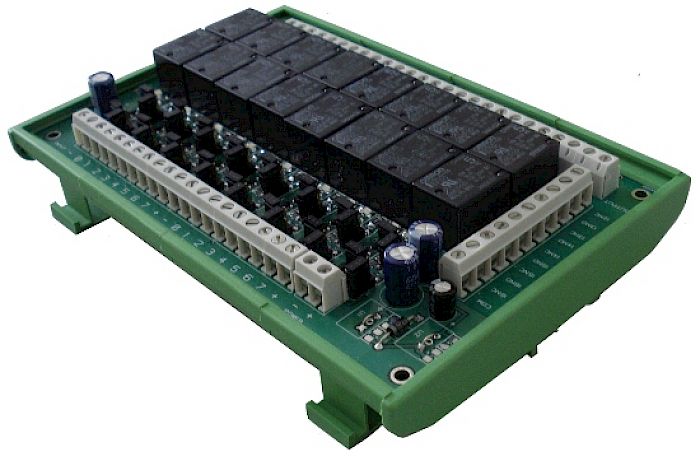
Relè-IO
This module can be used as an expansion for any I/O card, transforming the TTL or contact freedmen open-collector type outputs (up to a maximum of 16 ones) in 16 relay outputs with NO and NC contact.
Details